Choosing a Pendant Light for a Hallway
A hallway pendant is seen in passing and from close range. Give its shape room to breathe, keep the route through the house clear, and choose a form that welcomes you into the spaces beyond.
Hallway pendant lights: narrow, rounded or shallow
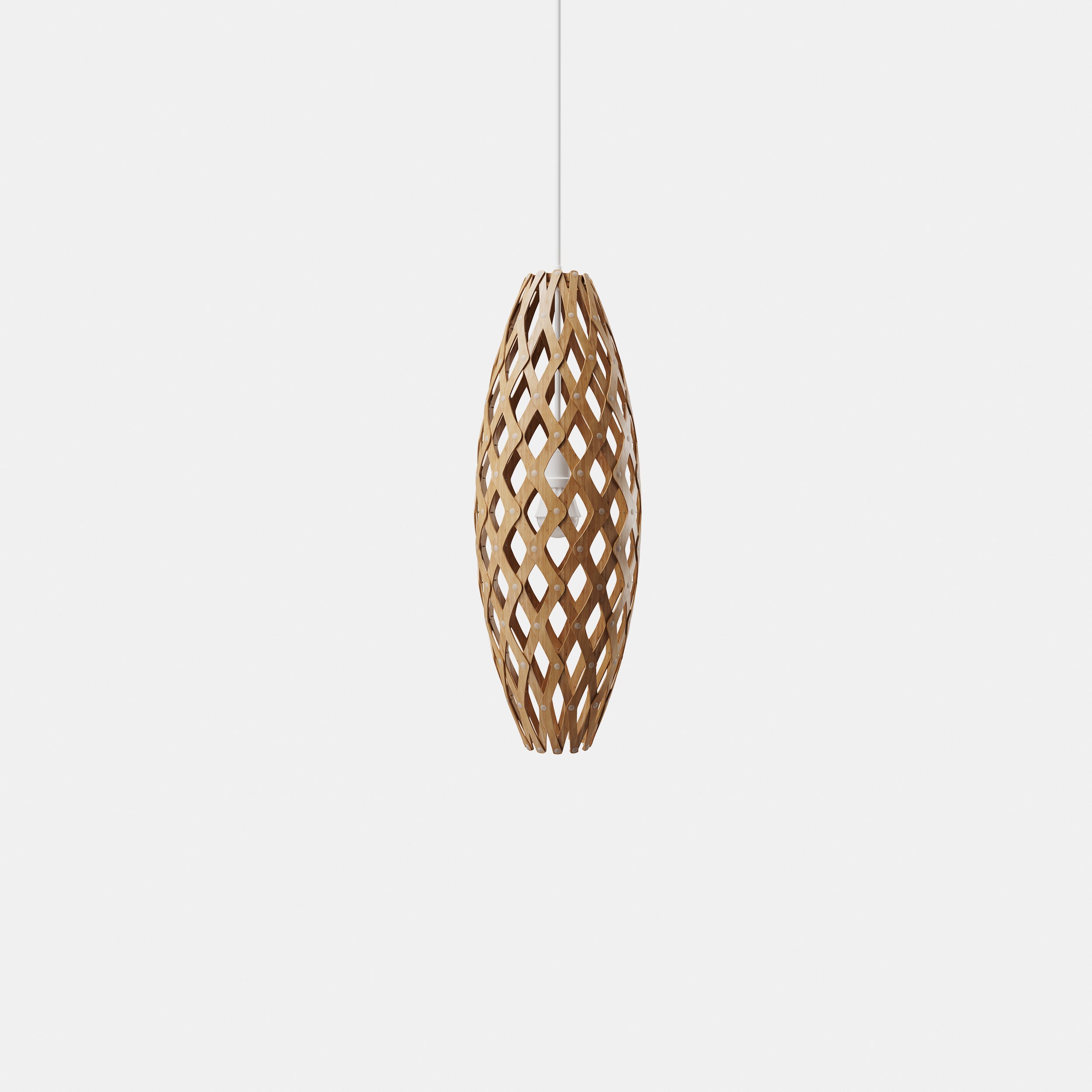 Explore HīnakiSizes 500 to 1400 mm
 Explore FloralSizes 400 to 1600 mm
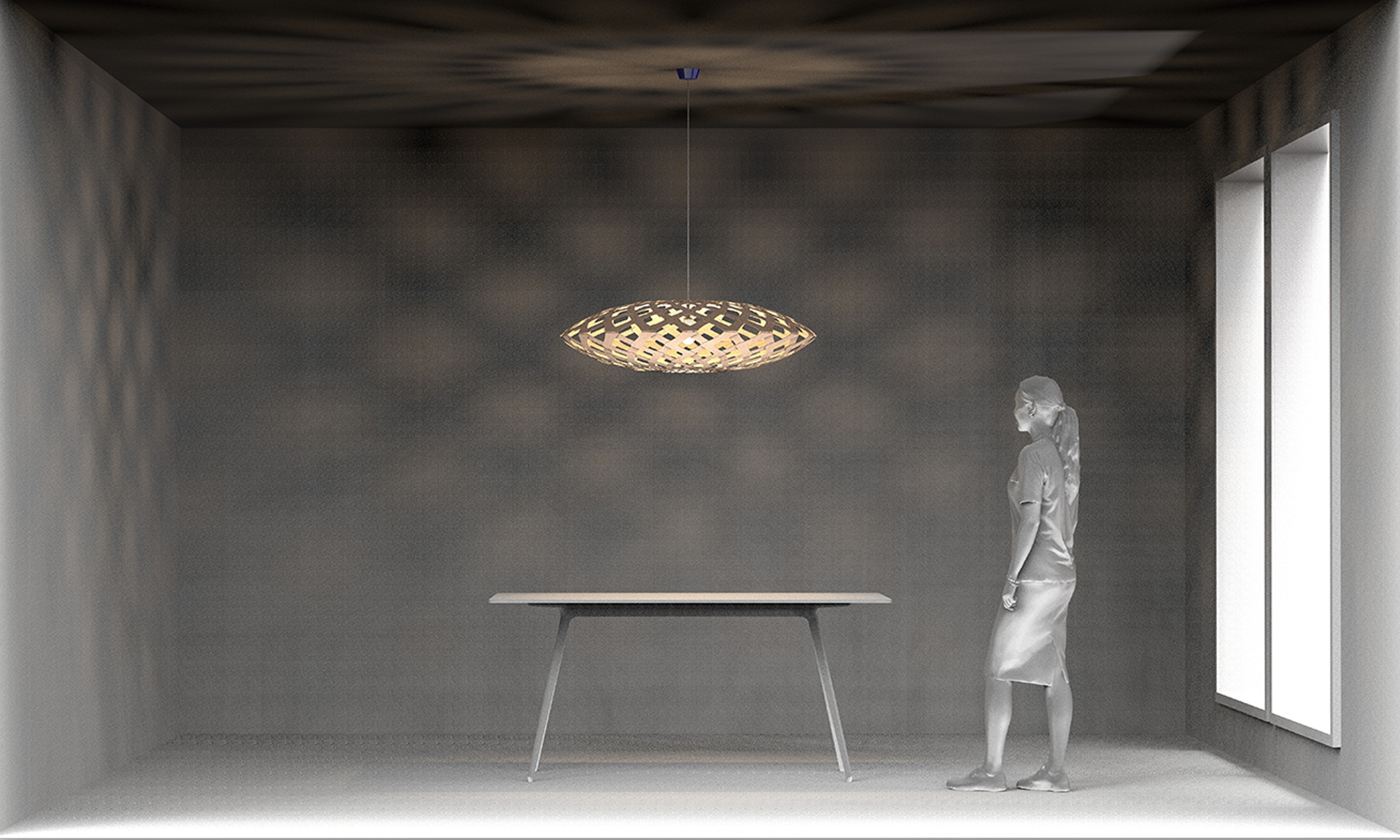 Explore FlaxSizes 800 to 1500 mm
Hīnaki has an elongated form inspired by fish traps. The 500 mm-high version is 170 mm wide, while the 900 mm version is 320 mm wide. Its narrow outline offers a different starting point from a broad sphere, though its height still needs room.
Floral brings a rounded pattern, with its smallest diameter at 400 mm. For a broad entrance with less room for a deep shade, look at the proportions of Flax. Compare actual width and height rather than assuming a smaller product name means a smaller footprint.
Hīnaki was David's first exploration into lighting in 1995. Its origin in woven fish traps is still easy to see in the long, open lattice, especially when you pass it at close range.
Read the hallway from both ends
A hall is a route before it is a place for an object. Note the doors, stairs, cupboards and changes in ceiling height. Look back from the far end: the light may be seen against a window or through several doorways. A fitting that feels balanced in one photograph can look very different along that longer view.
Our guide to choosing pendant lights helps establish the role of the light. In an entrance, the pendant may give the space its identity while other lighting illuminates the route and nearby storage.
Make a clearance drawing
Measure floor to ceiling at the intended connection. Add the height of the whole shade and the proposed suspension. Mark the lowest point on a side view of the hall. Include the opening arc of every nearby door and cupboard.
Then check the route with the people and objects that use it, including tall furniture being moved through the house. A pendant over open circulation needs a different assessment from one over a table. Have your installer confirm the appropriate clearance for the actual fitting and location. Our pendant height guide separates these situations.
Entrance pendant lighting and repetition
A single fitting can give a short entrance a centre. A long corridor may benefit from repeated forms, but draw their full widths and drops before deciding on a number. Check how they line up with doors and any existing ceiling features.
Our guide to multiple pendants covers pairs and rows. Repetition should support the length of the space without turning each view into a stack of overlapping shades. Check the arrangement from an adult's eye level and from the rooms opening onto it.
Plan the light and its upkeep
Open shades bring patterns to nearby surfaces. In a narrow hallway, a wall can be quite close to the light, so that pattern may become a strong part of the room. Think about whether you want that activity on the walls or a quieter effect from a more diffuse bulb.
Keep a practical route for cleaning and changing the bulb. A fitting that is easy to admire but difficult to reach deserves an access plan before it is installed. Our care guide explains looking after the materials.
Browse our pendant lighting for a shape you will enjoy coming home to. The sizing and clearance suggestions depend on your hallway; we offer free render visualisations using your exact room measurements to help compare the proportions.
Your questions
Can a pendant work in a narrow hallway?
A narrow form may suit the proportions, provided the fitting and suspension leave appropriate clearance. Measure doors and circulation as well as the ceiling.
How many lights should a long hallway have?
Start with the illumination needed along the route, then consider the visual rhythm of any decorative pendants. A lighting professional can assess the practical coverage.