How to Choose Pendant Lights
Choose a pendant by deciding what it should do in the room, then test its size, position and light. The form should feel at home in daylight and bring the atmosphere you want after dark.
Choosing pendant lights: start with purpose
Some lights illuminate a task; others give a room its general light or create a focal point. Our pendants bring decorative and ambient light, with separate task lighting where reading or preparation needs it. Compare ambient and task lighting before choosing the shape.
Explore our pendant lighting collection with that role in mind.
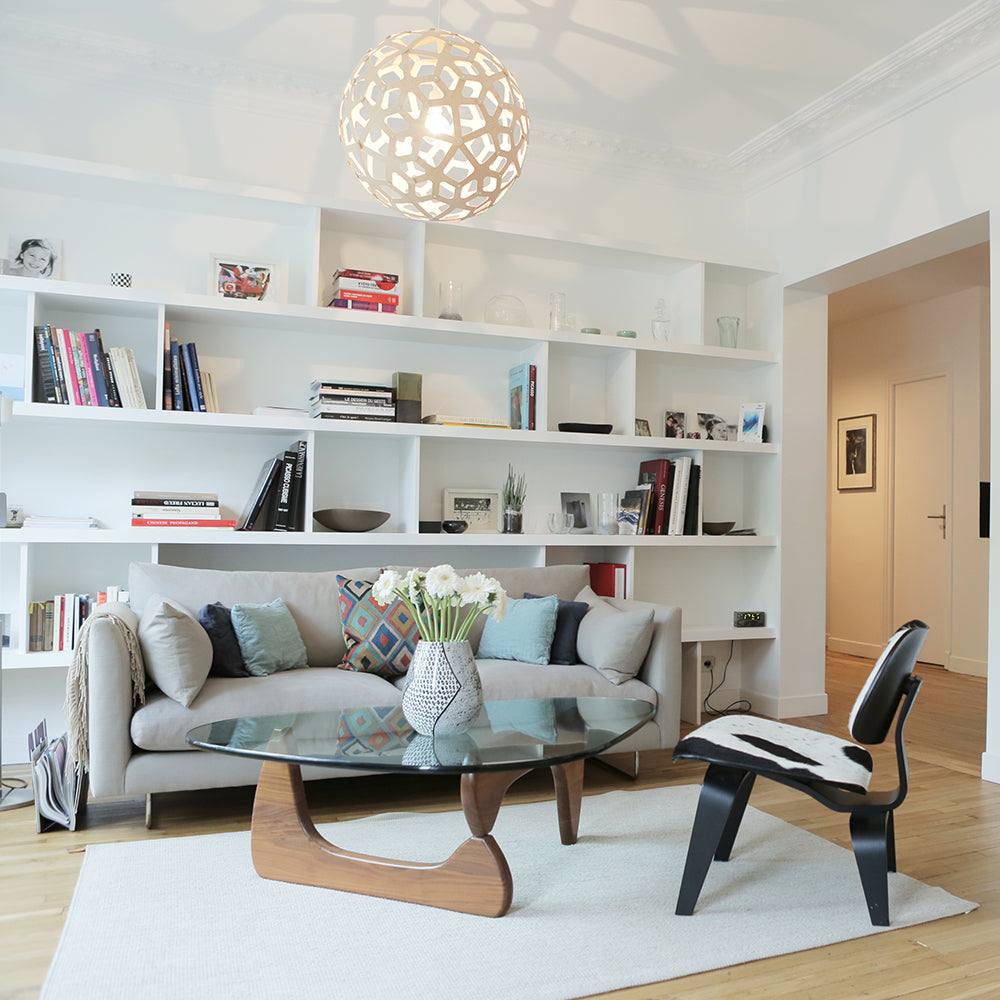
We make our bamboo kitset lights in New Zealand, with small pieces that assemble into an open form. You see the structure in daylight and its pattern on the room after dark.
We are a certified B Corp. The care we put into making our lights belongs alongside the pleasure of choosing a form you will enjoy living with.
Choose the room and the view
A light over a table belongs to the people gathered beneath it. A hallway or stairwell has different movement and clearance needs. Begin with the dining-table selection, kitchen-island guide or living-room forms for your setting.
Over a kitchen island, a pendant usually gives the island its centre while separate light reaches the worktop; compare one generous shade with a pair or a row along its length.
Look from the usual seats and the doorway, not only from directly below the fitting.
Test size and height together
Width, depth and openness all change how large a shade feels. Our size guide uses table proportions and full-size outlines to make that decision tangible. Then use the height guide to calculate the space for the whole fitting and its suspension.
Over a table, start with a shade around half to two-thirds of the table width. A 1200 mm-wide table suggests a 600 to 800 mm outline to test. Begin with the bottom of the shade around 800 to 900 mm above the surface, then check seated sightlines. These are visual starting points; open walkways and stairs need a separate clearance assessment.
One form or several?
A single shade gives a clear centre; a pair or cluster creates a relationship between forms. Compare multiple pendant arrangements and chandeliers versus pendants. If the room needs a clear ceiling or open view, consider alternatives over an island.
Compare an open, rounded form such as Coral with a broad, shallow Flax. A wide shade can be low in height, while a narrow form can need a long drop.
Choose the evening light
The bulb is part of the design. Clear and frosted sources change the shadow pattern, while colour temperature changes the appearance of the light. For a closer connection to natural forms and materials, explore our biophilic lighting guide.
Pendant lighting buying guide: three checks
Before ordering, check the whole fitting, including its height and suspension. Test the outline from your usual seat as well as from the doorway. Finally, keep brightness separate from shade size: a larger decorative form does not automatically give more useful light for a task.
Start here
- Decide what each light should do.
- Test the shade's full dimensions.
- Work out the complete hanging arrangement.
Keep your room measurements, preferred models and a photograph together. They form a useful brief for our team and your installer.
Explore the guides
Follow the question that matters most to your room, then return here as the choices come together.
- Dining Table Pendant LightsChoose dining table pendant lights by shape, size and the way they cast light. Explore our designs and plan a pendant around your table.
- Kitchen Island Pendant Lighting in NZPlan kitchen island pendant lighting in NZ with real shapes, sizes and room checks. Explore our pendants and keep practical task lighting in the plan.
- Pendant Lights for a BedroomExplore pendant lights for a bedroom, from a central sculptural form to bedside hanging lights. Compare sizes, positions and separate reading light.
- Pendant Lights for a Living RoomChoose pendant lights for a living room around seating, ceiling height and layers of light. Explore sculptural forms and compare their room proportions.
- Choosing a Pendant Light for a HallwayChoose a pendant light for a hallway with shape, ceiling space and door movement in mind. Explore our forms and prepare a useful installation brief.
- Choosing a Pendant Light for a StairwellPlan a pendant light for a stairwell around the void, views and maintenance access. Explore vertical forms and prepare dimensions for your installer.
- Pendant Light Size GuideUse our pendant light size guide to compare diameter, height and table proportions. Try worked examples and a full-size mockup before choosing a design.
- Pendant Light Height: Tables, Islands and Open SpacesWork out pendant light height above a table or island with a complete drop calculation. Check sightlines, shade size and the space for suspension.
- Pendant Light vs Chandelier: Which Suits Your Space?Compare a pendant light vs chandelier by structure, scale and the light it creates. Explore single forms and grouped pendants for your room.
- Alternatives to Pendant Lights Over an IslandCompare alternatives to pendant lights over an island, including recessed, track and flush lighting. Choose around ceiling space, views and working light.
- Ceiling Light Too Bright? Adjust the Light, Keep the FormIs your ceiling light too bright? Separate glare from brightness, compare lumens and bulb finishes, and plan a more comfortable combination of lights.
- Ambient vs Task Lighting: Give Each Light a PurposeUnderstand ambient vs task lighting and where a decorative pendant fits. Compare room examples and build a lighting plan around what you actually do.
- Clear vs Frosted Light Bulbs: Light and ShadowCompare clear vs frosted light bulbs for open pendant shades. Learn how bulb finish, LED arrangement and position change the light and shadow.
- Multiple Pendant Lights: Rows, Pairs and ClustersPlan multiple pendant lights as a row, pair or cluster. Compare real small models, Cascade Top compatibility, spacing and the full composition.
- Coastal Pendant Lighting for Natural InteriorsExplore coastal pendant lighting inspired by sea, sky and natural forms. Choose a light for your interior by material, scale and the shadows it makes.
- Biophilic Lighting: Bringing Nature into the RoomExplore biophilic lighting through natural forms, materials, daylight and shadow. Discover how our nature-inspired lights can belong in your interior.
- Warm White vs Cool White: Choosing the Colour of LightCompare warm white vs cool white light, Kelvin and lumens. Choose colour for living rooms, dining and work areas, and explore our lighting designs.
Find a form to live with
Find a form you want to live with in our pendant lighting collection. These proportions and hanging heights are recommendations that depend on your space; ask us for a free render visualisation using your exact room measurements to compare the final choices.