Coastal Pendant Lighting for Natural Interiors
For coastal pendant lighting, we would begin with Kina: a bamboo form inspired by a sea urchin shell. Its open structure, natural material and changing pattern of light can sit quietly alongside the view.
Coastal pendant lights with a story in their form
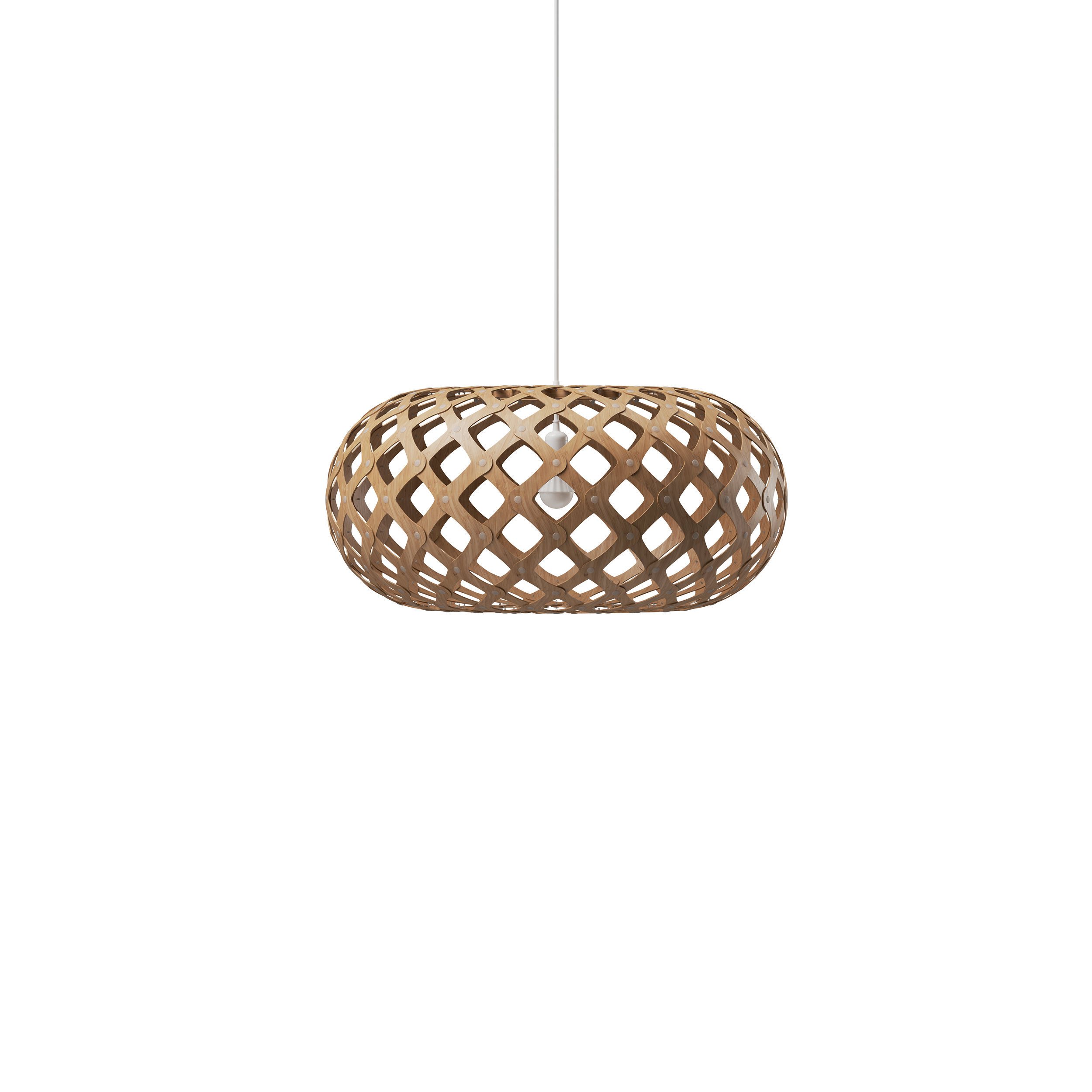 Explore KinaSizes 440 to 1400 mm
 Explore HīnakiSizes 500 to 1400 mm
 Explore CloudSmall 1250 mm wide, or Large
Start with Kina. David developed its form after seeing a sea urchin shell frozen beneath Antarctic ice in 2005. The interwoven bamboo pieces bring that shell's rounded structure into the room. Widths of 440, 600, 800, 1000 and 1400 mm let you explore its proportions over a table or within a larger open space.
Hīnaki draws on woven fish traps and offers a long, slender outline. Cloud looks to the clouds David saw over Pacific islands. Cloud Small measures 1250 mm wide, 1250 mm long and 450 mm high, so it belongs in a space that can hold that breadth.
Where the layout calls for a narrower, elongated feature, compare Navicula Small at 570 mm wide, 1440 mm long and 200 mm high. Its gentle upward glow creates atmosphere; give reading and other tasks their own light.
Let the room lead the coastal mood
Look at what the room already holds: timber, pale walls, woven surfaces, a changing sky or a view of water. Choose a pendant that has a relationship with those elements. It can echo a natural form without turning the room into a theme.
Our guide to choosing pendant lights starts with purpose and proportion. For a coastal interior, include the daylight view as well as the evening atmosphere in that decision.
Choose natural materials deliberately
Our bamboo and plywood forms have their own textures, edges and construction. Look at them with the timber and other natural materials already in the space. A connection can come from a shared warmth or openness without every material matching exactly.
For more of the thinking behind these choices, read our biophilic lighting guide. It explores natural form and pattern as design choices, with the room and the object considered together.
We make Kina's bamboo components into a flat-packed kitset, letting you assemble the sea urchin form piece by piece. It is a tactile connection to the design before the light ever reaches the ceiling.
Coastal lighting for the interior
These pendants are intended for suitable dry interior spaces. Choose the position around the material's care requirements, particularly in a home where doors are often open to the weather. Use purpose-specified exterior fittings for exposed outdoor locations.
Our care guide explains looking after the lights. Bring any questions about a particular room or exposure to our team before deciding on a model.
Keep the view and proportions open
A broad window is part of the room's composition. Check the pendant from the seats where people enjoy that view, not only from the doorway. An open shade can let parts of the background remain visible, but its widest outline still needs to sit comfortably in the space.
Use our size guide to make an outline at the intended dimensions. For a dining setting, compare the form with the table's width and the line of sight across it. A beautiful view and a sculptural light should have room to coexist.
See what happens after sunset
When the window becomes dark, the room's own lighting takes on a different presence. Consider the pendant's reflection in the glass and the shadows on nearby walls. A clear bulb and a diffuse source can change the character of an open shade.
The bulb-finish comparison helps you choose that effect. Keep other lights available for reading and practical tasks, so the pendant can contribute the atmosphere you want.
Begin with Kina and the way its sea urchin form sits alongside your view. These size and placement recommendations depend on your interior; ask us for a free render visualisation using your exact measurements.
Your questions
Does coastal lighting mean outdoor lighting?
No. Coastal can describe an interior style. These pendants belong in suitable dry interiors; exposed locations need fittings specified for that environment.
Do coastal pendant lights have to be pale or white?
No. Shape, openness, material and the relationship to the room can create the connection. Choose the finish with the whole interior in view.