Dining Table Pendant Lights
A dining table pendant brings people and light together. Start with the shape of your table, then choose a form that leaves room for conversation and gives the table its own place in the room.
Choose a shape for your table
A round table and a rounded shade share a centre. A long table gives you more possibilities: one generous form, an elongated light, or a considered row. Look at the arrangement from the doorway as well as from a chair. The fitting should belong to the table without hiding the room beyond it.
Our guide to choosing pendant lights starts with the purpose of the light. For dining, that usually means balancing atmosphere with enough light to see food and faces comfortably. A decorative pendant can be part of that balance alongside other lighting.
Three forms to explore
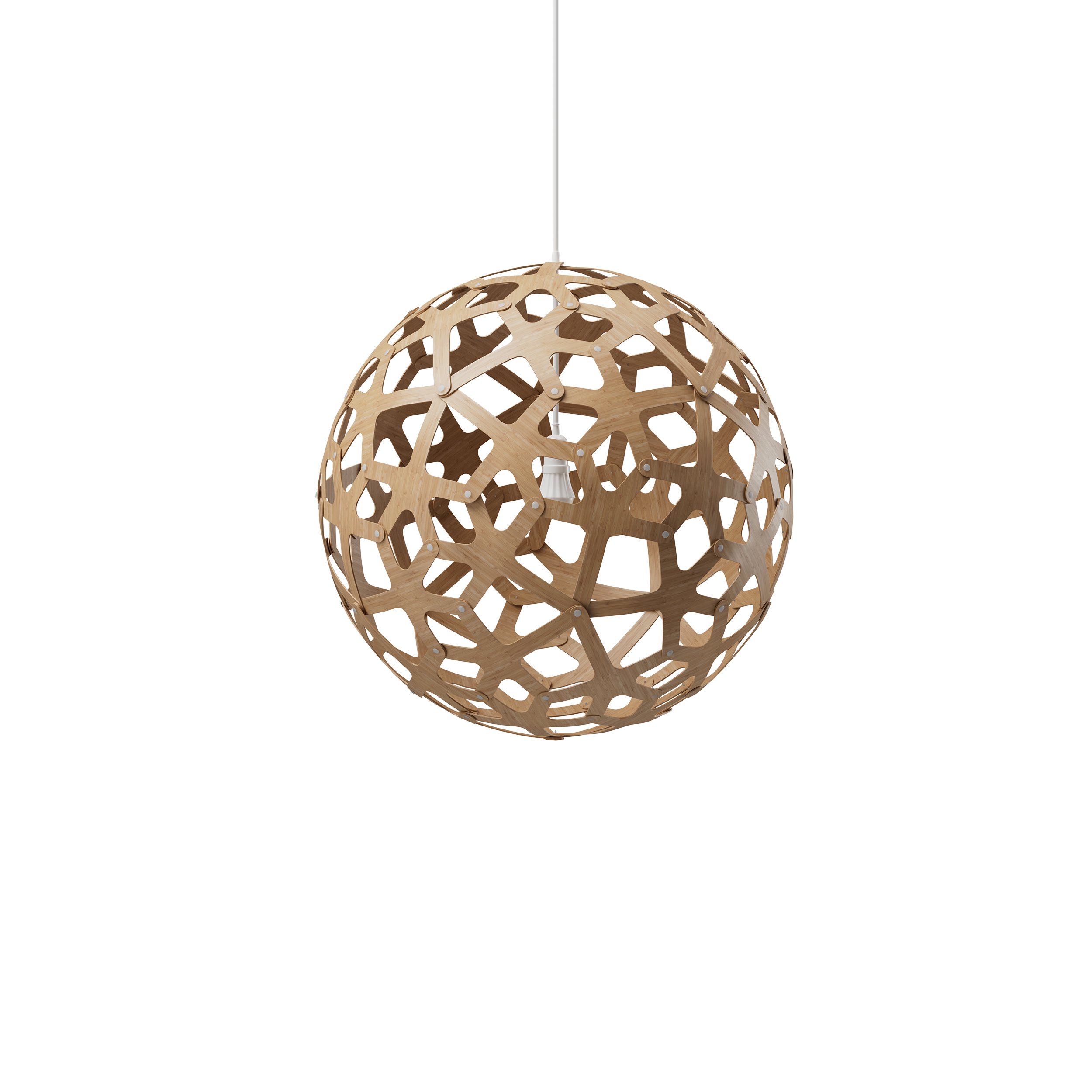
Coral brings an open, rounded structure and a pattern of light and shadow. Its familiar outline can give a round or rectangular table a clear centre. Floral has a more open flower-like pattern, with sizes from 400 to 1600 mm in diameter. Begin with the size your room can hold, then choose the finish.
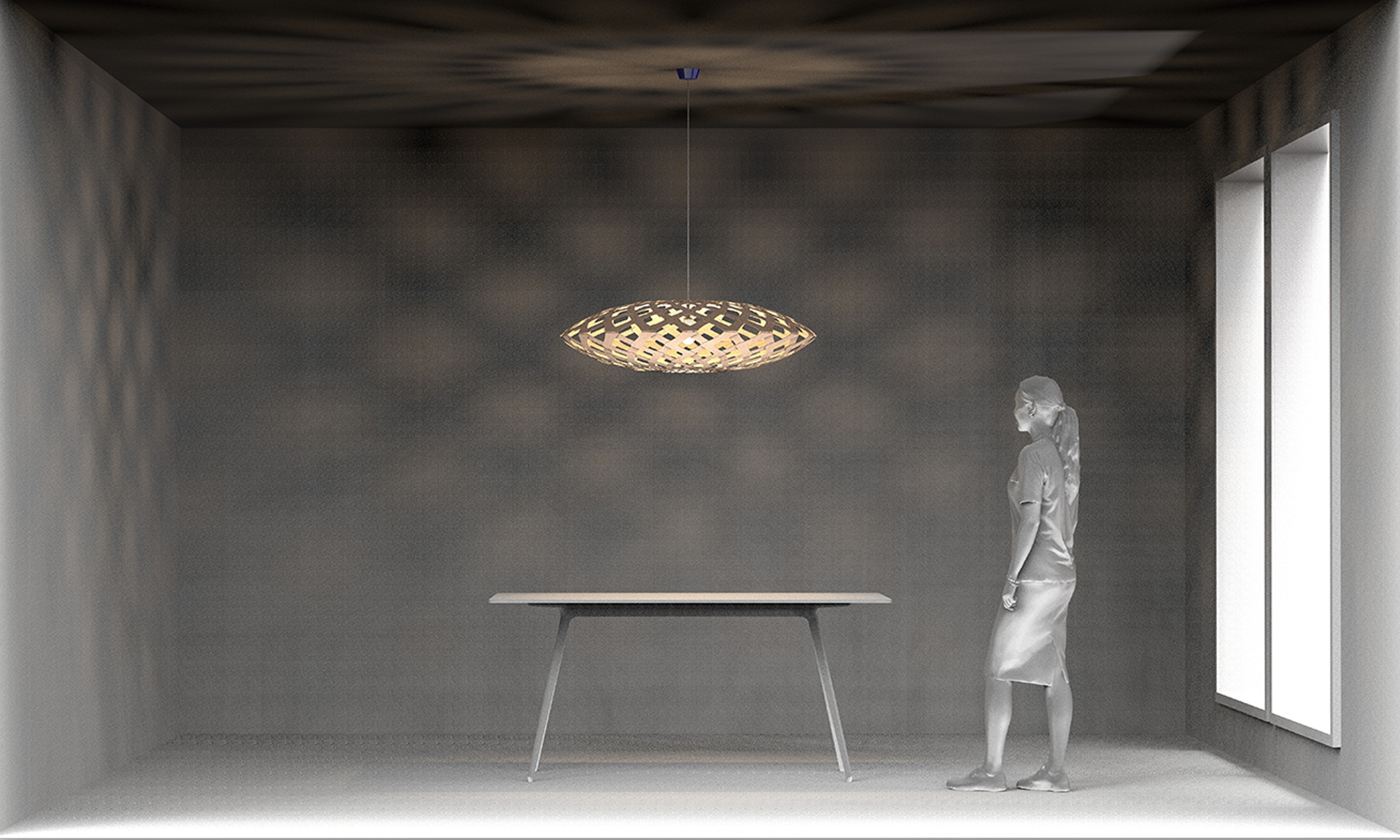
For a broader, shallower silhouette, look at Flax. Its forms draw on harakeke leaves. The 800 mm model is 220 mm high, which gives it a very different relationship to the ceiling from a deep spherical shade. Shape matters just as much as diameter.
We make Floral in New Zealand from sustainably grown, EPD-certified bamboo. It arrives flat-packed as a kitset, ready to take shape by hand before your electrician hangs it over the table.

Dining room pendant lights: proportion before quantity
As a starting point, choose a single shade around half to two-thirds of the table's width. On a 1000 mm-wide table, that suggests roughly 500 to 670 mm. It is a visual guide, not a reason to ignore the height or openness of the fitting. Our pendant light size guide shows how to test the outline before ordering.
For an extendable table, consider how often it is used at its full length. Mark the everyday position and the extended footprint. A row may suit a long table, but every extra fitting changes the visual weight and the installation. Compare pairs, rows and clusters before settling on a number.
Keep the view across the table
We suggest starting around 800 to 900 mm between the tabletop and the bottom of the pendant. Sit opposite another person and check the view across the table. Then stand back to check the fitting against windows, shelving and the kitchen beyond.
The full drop includes the shade itself. A 600 mm-high form needs more room than a shallow one, even when their bottom edges sit at the same height. Use our hanging-height calculation to bring the table, ceiling and fitting dimensions together.
Bring the light into the decision
The bulb changes what an open shade does after dark. A clear source can produce crisper patterns, while a more diffuse source softens the effect. Think about where those patterns will land: nearby walls, the ceiling or the table. Choose colour temperature and output together with your other lights, rather than asking the pendant to do every job.
Explore our pendant lighting collection for the form and finish that belong at your table. Our sizing and hanging-height recommendations depend on your room; we can make a free render visualisation from your exact measurements to help you choose.
For a dining space open to guests throughout the evening, our restaurant lighting design guide considers table layouts, circulation and lighting controls together.
Your questions
Should the pendant be centred on the table or the room?
Begin with the table and its normal position. Check the whole room from several viewpoints, and have an electrician assess any change to the ceiling connection.
Can one pendant suit a long dining table?
It can, when its size and shape sit comfortably within the table's proportions. Compare the outline of one larger form with a row before deciding.